
The Test That Changes Everything (That Nobody Orders)

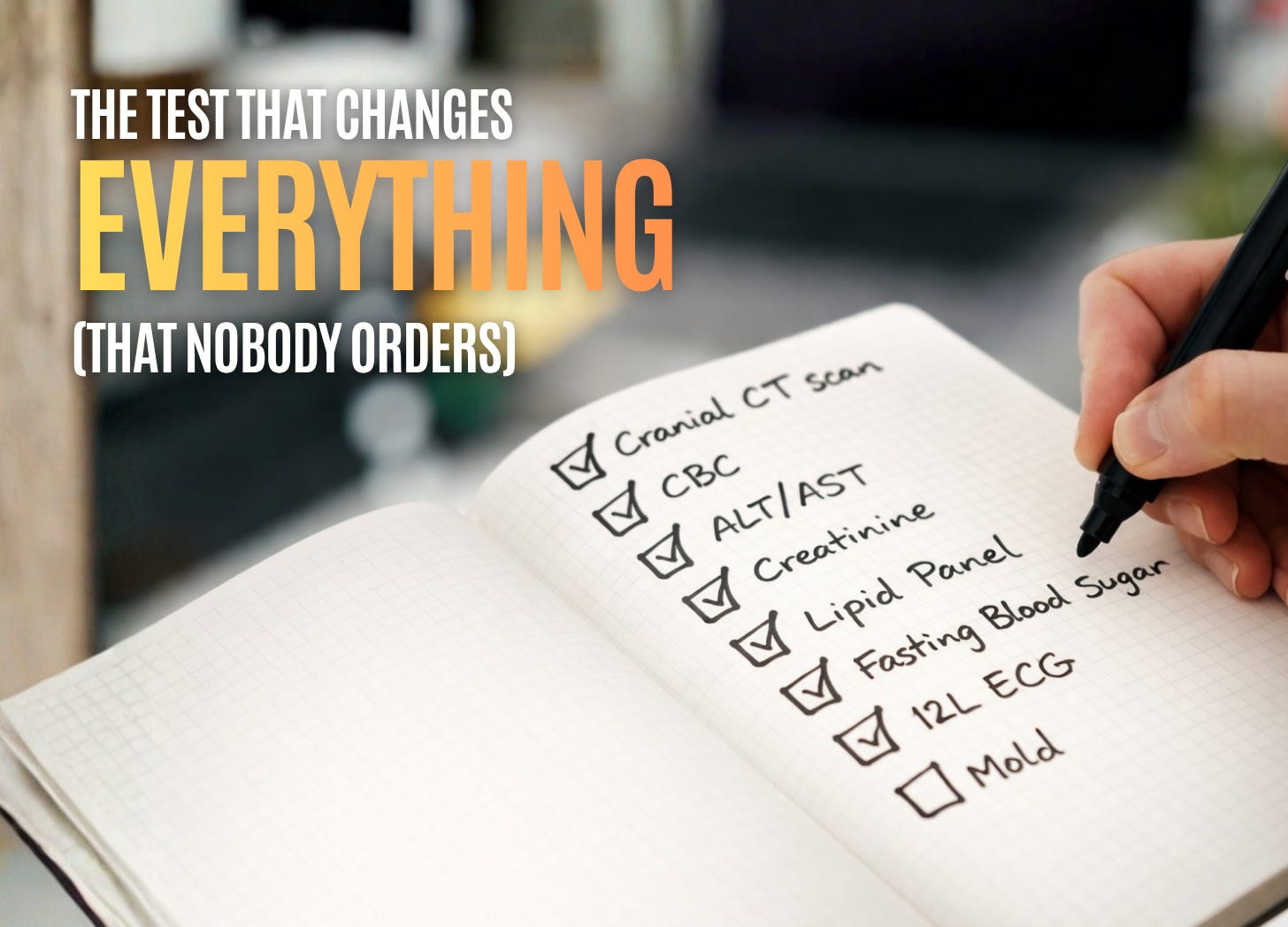
Here’s a thought experiment.
Take 100 neurologists. Give them 100 cases of cognitive decline. Ask them to work up each patient thoroughly.
How many of those 100 neurologists would order a mold test?
The answer is almost certainly zero.
I know this not just as a statistic. I know it as a son.
This One Is Personal
When my father began experiencing rapid cognitive decline, he was seen by neurologists, palliative care specialists, and his primary care doctor - a physician who had known him for thirty years and had visited him in his own home. This was in South Africa. These were experienced, caring clinicians. Not one of them identified mold as a factor.
Kristine Burke, M.D. asked me two questions about my father’s symptoms. Two questions. From across the world, having never examined him, she knew.
The answer was mold.
My father reversed his cognitive decline. From comatose to reading four books a week in four months.
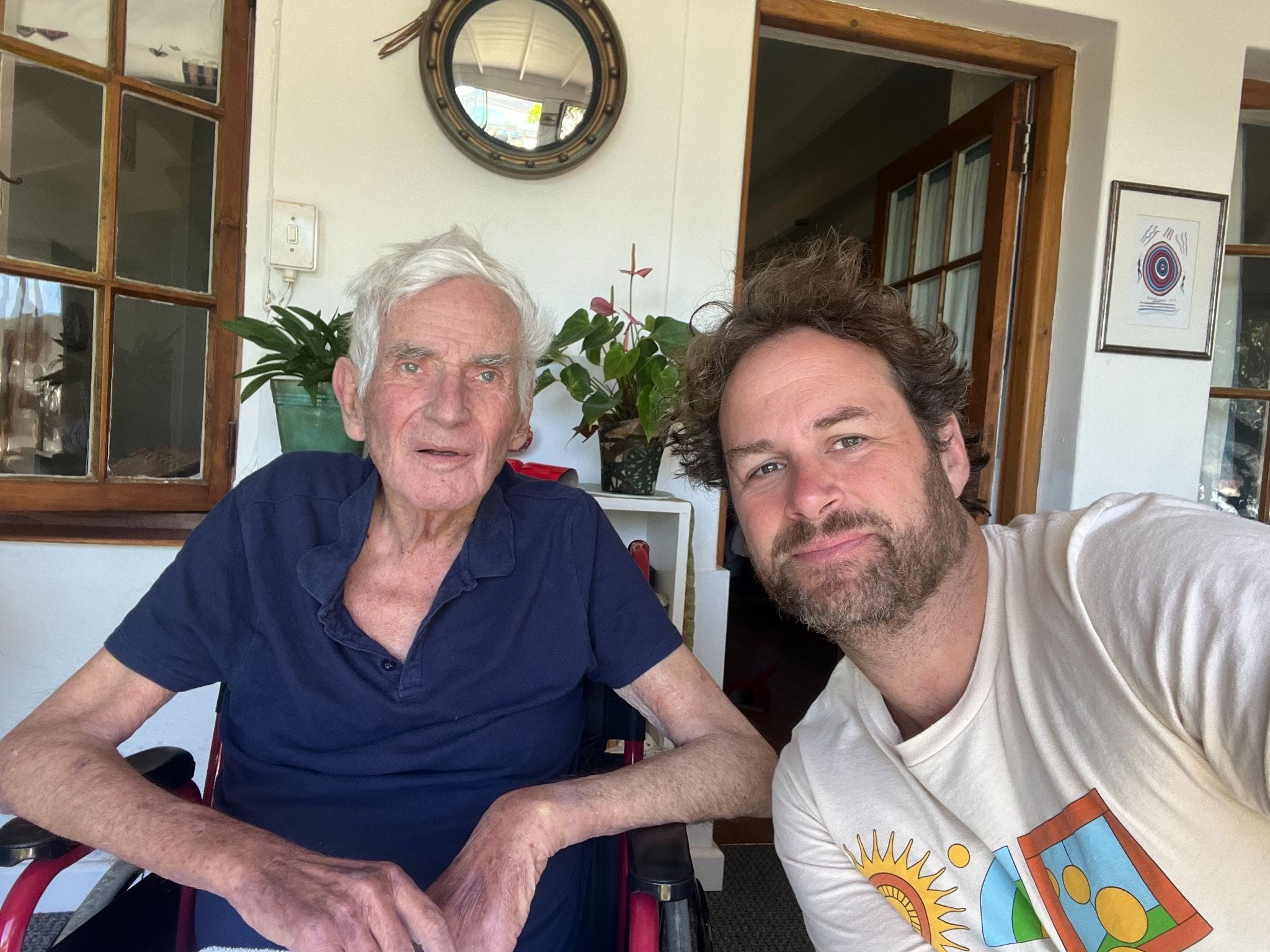
That’s why I’m passionate about this. Not only because it’s an interesting clinical hypothesis now being proven in emerging literature, but because it happened to my family. And because I know how many families are going through exactly what we went through, right now, with no one in the room who knows to ask those two questions.
The Pattern at the Mastermind Table
After a year and a half of bringing clinicians into the TruNeura mastermind, one insight comes up faster than almost any other when practitioners who have never reversed a case of cognitive decline sit down with those who are reversing it regularly.
Mold.
Mycotoxin burden.
Environmental exposure that nobody thought to ask about.
Again and again, practitioners come back and say: “I can’t believe, now that I’m testing everyone with cognitive decline, how much mold I’m finding.”
It’s not a fringe idea. It’s just knowledge that hasn’t crossed the right desks yet.
Why Doesn’t Conventional Medicine Test for This?
This knowledge lives at the intersection of functional medicine, environmental medicine, and integrative medicine — three worlds that most neurologists never visit. It took Dr. Burke attending dozens of conferences over two decades to synthesize what we now know about how mold affects the brain, how to identify it in the patient, how to identify it in the home, and what to do about it.
That synthesis, the clinical methodology, the testing strategy, the treatment framework, even innovations like the mold dog, now exists as a one-hour session inside the TruNeura training. One hour that represents twenty years of cross-disciplinary learning.
Not All Mold Tests Are Created Equal
Here’s where it gets nuanced and where even well-intentioned practitioners can go wrong.
There’s real subtlety in mold testing. Which test is clinically validated? Should your methodology be different for a patient who has symptoms associated with exposure versus one who doesn’t? How do you interpret a mixed result? What does a meaningful mycotoxin burden actually look like on a panel?
These aren’t questions you can fully answer from a single lecture. They’re the kind of clinical judgment that develops through seeing case after case, comparing notes with colleagues, and building pattern recognition over time. Which is exactly why the mastermind format accelerates this learning so dramatically.
If You Find Mold, Then What?
This is the question that trips up even practitioners who are already testing. You run the panel. Mold comes back positive. But so do several other causal factors: metabolic dysfunction, sleep apnea, nutrient deficiencies, cardiovascular risk. Now what?
Knowing how to prioritize mold remediation relative to the other drivers in a complex case is its own clinical skill. Do you address mold first? Do you work in parallel? Does the severity of the mycotoxin burden change the sequencing? These judgment calls can significantly affect outcomes and they’re exactly the kind of nuanced, case-by-case reasoning that gets developed inside the mastermind, not in a textbook.
How TruNeura Makes It Easier to Act On
The specific test that shows up in the research paper is the Mosaic Diagnostics MycoTOX test. And here’s the part that matters for busy clinicians: TruNeura will automatically score your patient’s Mosaic results giving you a clear score out of 100, so you can immediately see to what degree mold is a significant factor in that patient’s presentation.

Learning to interpret an unfamiliar test is a barrier in its own right. TruNeura removes that friction entirely. You get the result, you get the score, and you know where it sits in the clinical picture, no manual interpretation learning curve. Just signal, when you need it most.
The Question Worth Asking
The patients sitting in front of you with cognitive decline have likely never had this conversation with their neurologist. They’ve never had this test ordered. They may be carrying a toxic burden that’s driving their symptoms in ways that no pharmaceutical intervention will touch.
A physician who had known my father for thirty years and visited him in his home never thought to ask.
Dr. Burke knew in just two questions.
That gap, between what’s possible and what’s currently practiced, is exactly what TruNeura exists to close.
You can watch Dr. Burke’s complete one-hour mold methodology inside TruNeura right now and get access to additional tools and program building resources, for just $199 for your first month.
One hour of the right knowledge, applied consistently, could transform the care you deliver for the rest of your career. It may be the best investment you ever make for your patients, and for the families counting on you to ask the right questions.

Thank you for this post. Doctors here in the humid South especially need to see it. First for knowing about mold and second for the 4 books a week outcome!
Absolutely James. So many people suffering unnecessarily. You know my story. What a great mission.