

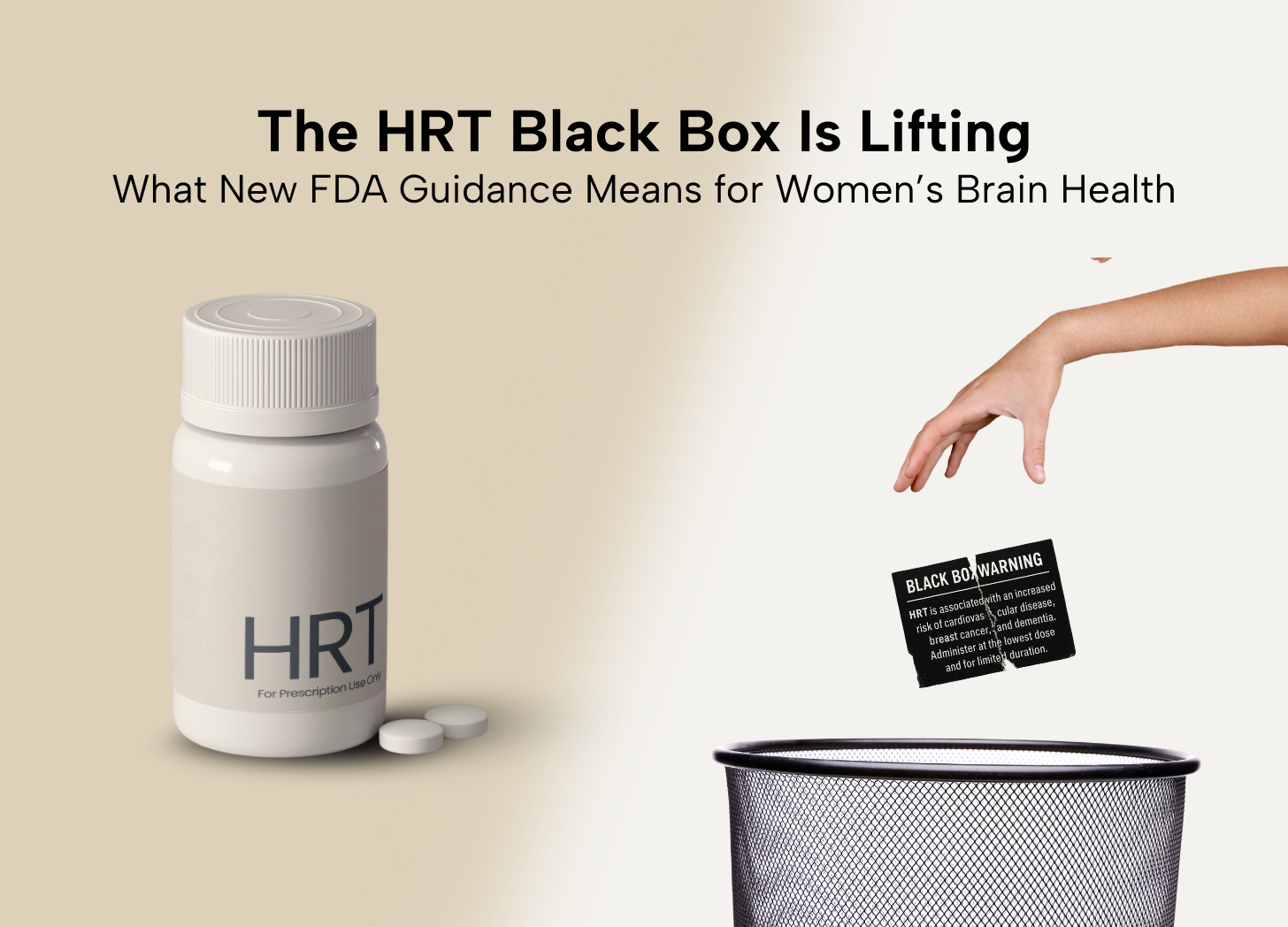
Last week, something subtle but monumental happened in women’s health. The FDA officially softened the black box warning on hormone replacement therapy (HRT), a warning that has loomed over clinicians and patients since 2002. For more than two decades, the shadow of that warning shaped the medical conversation, created confusion, and kept millions of women from receiving therapies that could help them feel and function dramatically better.
Now, with updated guidance acknowledging that the benefits of hormone therapy may outweigh the risks for many women, we’re entering a new era. It won’t be splashed across the front page of the Wall Street Journal, but for those of us working in the fields of cognitive decline and preventive neurocare, this is a seismic shift.
For years, the science has been clear. The old narrative was built on outdated interpretations of the WHI study. A generation of women suffered for it. Today, the tide is finally turning.
The Cache County Study: Still the Most Important Clue We Have
A few months ago on the TruNeura blog, we published a deep dive titled Hormones and Cognitive Decline, which highlighted one of the most important population-based studies ever conducted: the Cache County Study.
This landmark study followed thousands of women over time and discovered something game-changing:
Women who received estrogen therapy around the time of menopause had a significantly reduced risk of developing Alzheimer’s disease.
The timing mattered. The metabolic context mattered. The networks that keep the brain resilient mattered.
The Cache County data reinforced what many integrative and functional clinicians had long suspected: estrogen plays a neuroprotective role. When hormone levels fall, neuroinflammation rises, mitochondrial efficiency drops, and synaptic density declines. In other words, estrogen is a cornerstone of network sufficiency.
Hormone therapy, when delivered appropriately, isn’t just about feeling better—it’s about maintaining cognitive capacity for decades to come.
When an Industry Booms, Commoditization Follows
Here’s the other big trend happening right now: hormone therapy is exploding. Telehealth platforms, weight-loss clinics, aesthetic practices, and boutique HRT centers are proliferating at breakneck speed.
This increase in access is a good thing.
But it comes with a predictable downside: commoditization.
When dozens of clinics all offer the same hormones, the same follow-up structure, the same protocols, and the same price points, it becomes harder for any practice to differentiate. More importantly, it becomes harder for patients to find the depth of care they actually need.
And this is where the next evolution becomes so obvious:
The next generation of hormone practices will differentiate themselves with brain health.
Hormones might help patients feel younger—better sleep, better mood, better metabolism.
But integrating cognitive assessment, lifestyle optimization, and TruNeura’s eight pillars elevates a clinic from symptom management to true preventive neurology.
This is where the field is headed.
Announcing a New Collaboration for the Future of Hormone Practices
With that in mind, we’re excited to announce a new collaboration between TruNeura and Accelerated Medical Practices—the leading group helping hormone-based clinics grow sustainable, scalable business models.
Together, we’re hosting a special December webinar:
“Elevate Your Practice: How Brain Health Sets You Apart in a Crowded HRT Market”
This session will show clinics how to stand out in a rapidly commoditizing HRT landscape, deliver deeper outcomes for patients, and position themselves at the center of the brain-health revolution.

👉 Register for the December Webinar Here
The black box is fading.
The science is strengthening.
And the next decade of hormone therapy will be defined not just by symptom relief—but by brain protection, cognitive resilience, and the promise of long-term vitality.
